

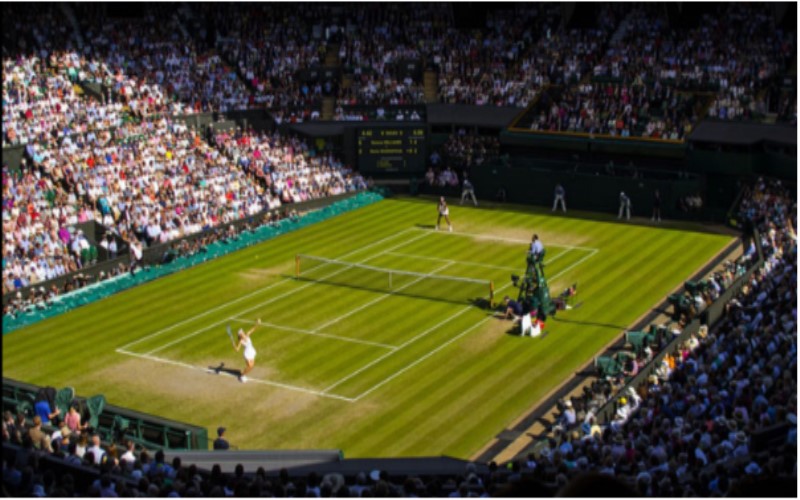
A symbol of the English summer, Wimbledon is an amazing and exciting event happening in London. The story of this tournament goes back to the 19th century. We will dig deeper in the sections below. In terms of Wimbledon history, this article has got you covered.
How It Started?
Tennis’s early history is thought to have started in northern France in the twelfth century, when the modern racquet was first used. What about Wimbledon? Some sporting competitions and tournaments have endured far longer than others and have withstood the test of time. Established in 1877, Wimbledon is one of them. The Americas Cup sailing competition is 26 years older than Wimbledon, but it is still technically older than the modern Olympic Games (the International Olympic Committee was founded 122 years ago). That being said, it is the oldest tennis tournament — older than both the US Open and the French Open at Roland Garros.
Why Is Wimbledon So Famous?
Wimbledon is one of the most loved tennis tournaments worldwide. It is modern, yet classy and has its own style and even dress code for players. Not only spectators enjoy the event; punters love it just as much. While the tournament is unraveling, you can place online bets on all the popular betting platforms, including 1xBet.
Tournament in 1877
The history of Wimbledon started in the 19th century. After the updated version of the original racquetball gained popularity, the All England Croquet Club, which hosted the tournaments, changed its name to Lawn Tennis. The fact that this court is entirely made of grass, as opposed to clay or hard courts, may be what makes it really unique. Tennis balls can travel across the court more quickly after making contact with the ground. In 1877, the first Wimbledon tournament consisted of just the Gentlemen’s Single. After playing a postponed match because of the rainy weather (oh, this British weather!), Spencer William Gore was crowned the first Wimbledon champion. A women’s championship was first allowed in 1884, and mixed men’s and women’s doubles were first permitted only in 1913. But let’s not run before the hounds and take one step at a time.
Wimbledon Enters the Open Era
The Open Era period started in 1968 when members of the International Tennis Federation gathered in Paris to sign the Open Era’s “birth certificate.” This change allowed amateurs to play with professional players in the same tournaments. From then on, Wimbledon started offering prize money. The first winners of the Open Era Wimbledon tournament won £2,000 and £750 respectively.

World War I
The Championships were suspended from 1915 to 1919 due to the outbreak of World War I, and the All England Club survived on donations from its members and wealthy patrons during this time. When hostilities blew up once more in 1939, Wimbledon had relocated from Worple Road to Church Road, growing in size, resilience, and professionalism. The Championships themselves were suspended between 1940 and 1945, but the club remained open to members during that time. The grounds were used for a range of war-related activities, such as civil defense training. However, a flock of 500-pound bombs, one of which struck the Center Court roof, severely damaged the club’s grounds on the evening of October 11, 1940. It took several years to rebuild the venue.
Equal Prize Money
It has been one thorny road, but in 2007, Wimbledon finally decided to award the same cash prizes to men and women. Finally, women were accepted as skillful athletes who deserve to be paid the same amount of money for their efforts as men. Gender pay inequality has been an apple of discord for many years until this decision was finally taken. It was Venus Williams who made her passionate plea for equal pay and she did get it finally after her victory over Marion Bartoli in 2007. This was a life-changing moment for female athletes.
Wimbledon Traditions
The tournament draws thousands of spectators from around the world with its unique customs and traditions, which include a strict all-white dress code and a signature dish of strawberries and cream. It is one of the four major tennis tournaments worldwide, and it has its own special vibe. It is the only Grand Slam competition held on grass; that hasn’t changed since its very beginning in 1877. The U. S. and Australian tournaments are held on hard court surfaces, while the French Open is played on red clay. There are tight guidelines regarding the grass. The turf, which is composed entirely of rye grass, is cut to the ideal playing height of 8 mm after being grown to a length of 15 mm in April.
Wimbledon Fashion
Wimbledon is a very strict tournament in terms of dress code rules. Let’s see how they work!
Dress Code
Every player taking part in Wimbledon has been required to don an all-white outfit from head to toe. Off-white and cream tones are inappropriate. Furthermore, any non-white outfit trim must be on the outside seam of the player’s outfit bottom, the sleeve cuff, or the neckline. It cannot be wider than one centimeter. The dress code also applies to socks, headbands, bandanas, wristbands, visible undergarments, and caps; all of these items must be white unless there is a trim of a color that is less than one centimeter. All-white shoes are required, down to the laces and soles. Even medical equipment is covered by the all-white policy. Historically, white has been associated with upper-middle-class leisure due to its ability to conceal perspiration and its neat, sharp appearance. It also represents goodness in aesthetics.
Tennis Balls
A fun fact here, by the way. Tennis balls used to be white, did you know that? In 1986, tennis balls were made yellow to make them easier to see on television. Since temperatures have an impact on the dynamics of the ball, more than 54,000 yellow tennis balls are now used during the Championships. Prior to use, the tennis balls are refrigerated to maintain their ideal temperature of 68 degrees, which is perfect for the game.
Controversies
Okay, one more gossip is coming right up! In 1919, a French tennis player, Suzanne Lenglen, got involved in what may have been the first significant global scandal on the reputable and highbrow Wimbledon courts. She put on a short-sleeved dress that did not even reach her calves. Plus, she was not wearing a corset. What an outrage! Suzanne’s attire was deemed indecent by the media. However, she managed to win this match with a score of 9-7 versus the seven-time champion, Dorothea Chambers. This incident marked the start of a revolution in women’s tennis clothing, as they gradually turned into more athletic wear we see on the court now.
Trophies and Prize Money
In 2024, singles champions took home a 5,4% share of the £50 million total prize pot, which represents a 14,9% raise on the amount paid to the singles champions in 2023.
Trophies have traditionally been presented by Prince Edward, Duke of Kent, who was elected president of the All England Lawn Tennis and Croquet Club in 1969. In 2016, Kate Middleton took over as a royal patron of Wimbledon from Queen Elizabeth. She used to attend trophy ceremonies with the Duke of Kent, but in 2023, she took over the responsibilities in full. Though the Princess of Wales is currently fighting cancer and has had almost zero public appearances in 2024, she attended the men’s finals between Carlos Alcaraz and Novac Djokovic. Accompanied by Princess Charlotte and her sister Pippa, Kate looked stunning in her purple dress.
The Role of the Royal Family
Oh well, Wimbledon is a quintessential part of the English summer for the royal family. The first known royal to be interested in tennis was Henry VIII, who frequently played at Hampton Court. Since 1907, a member of the royal family has been involved in the championship either as president or patron.
Conclusion
There are few athletic events that spark feelings of splendor, heritage, and glory all at the same time. The Wimbledon Championship is one of them. Classy and thrilling, this tournament harbors the best tennis players from all over the globe. A heartbeat of the tennis community, Wimbledon is a precious gem and an anticipated tournament for all the lovers of the sport.